

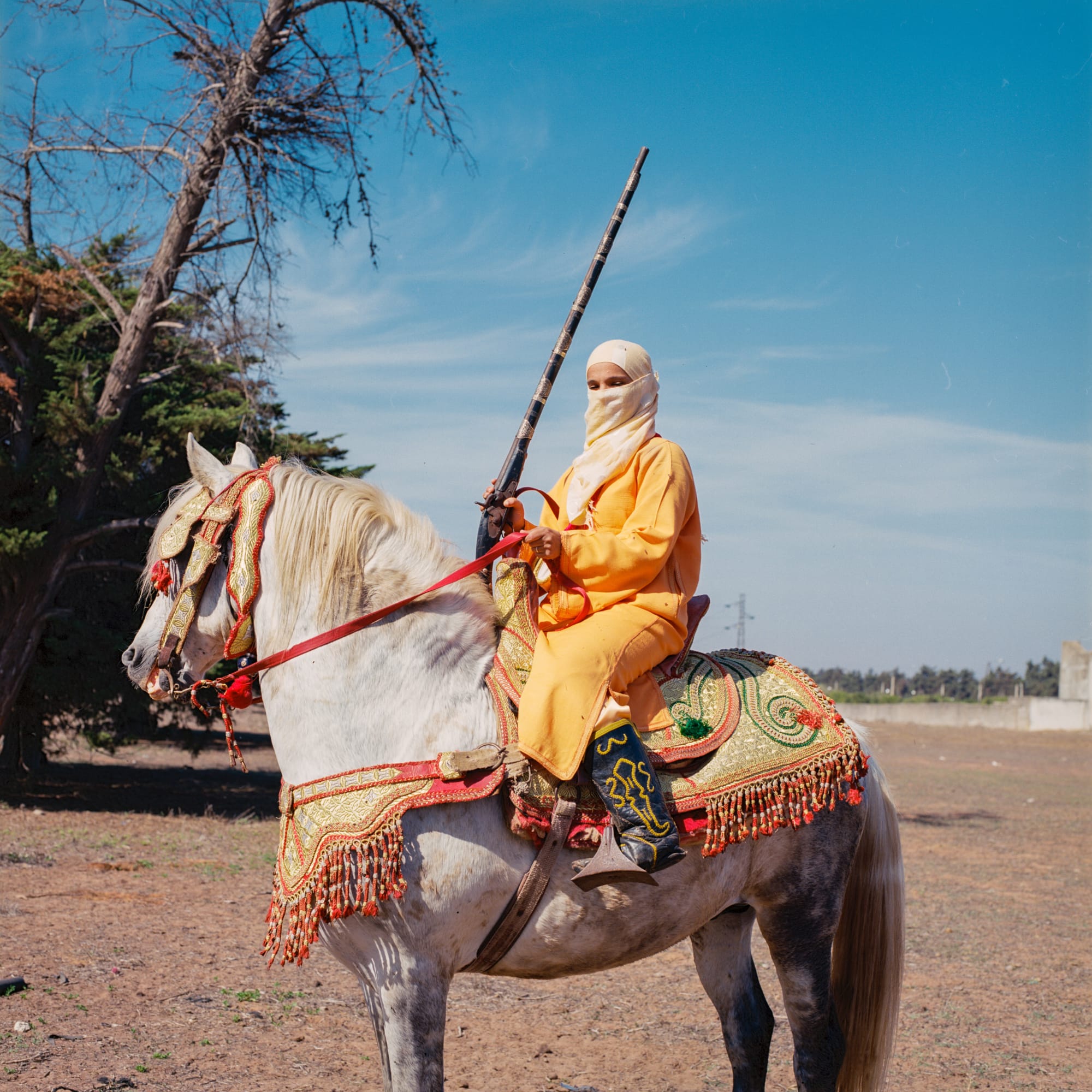
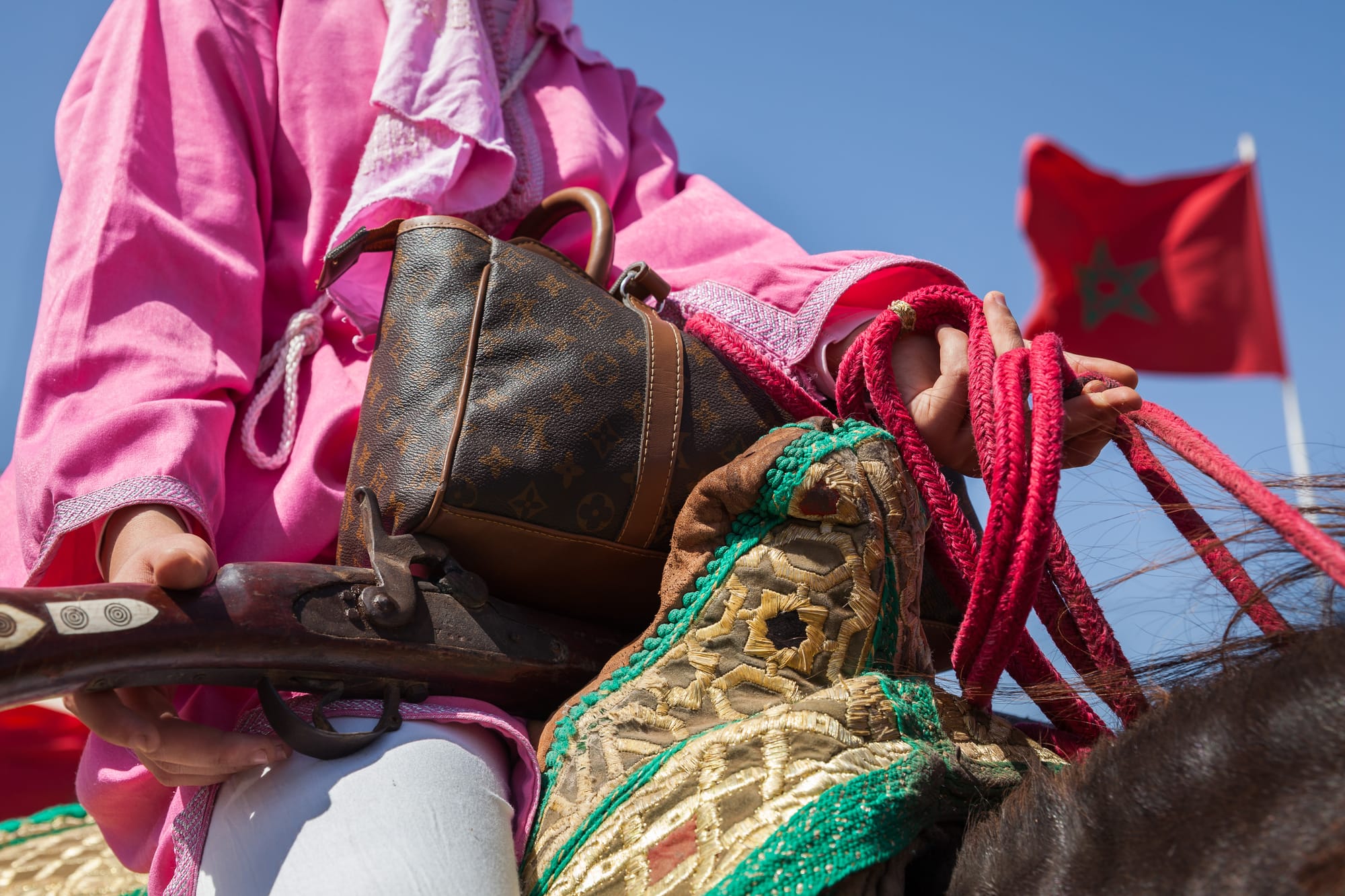
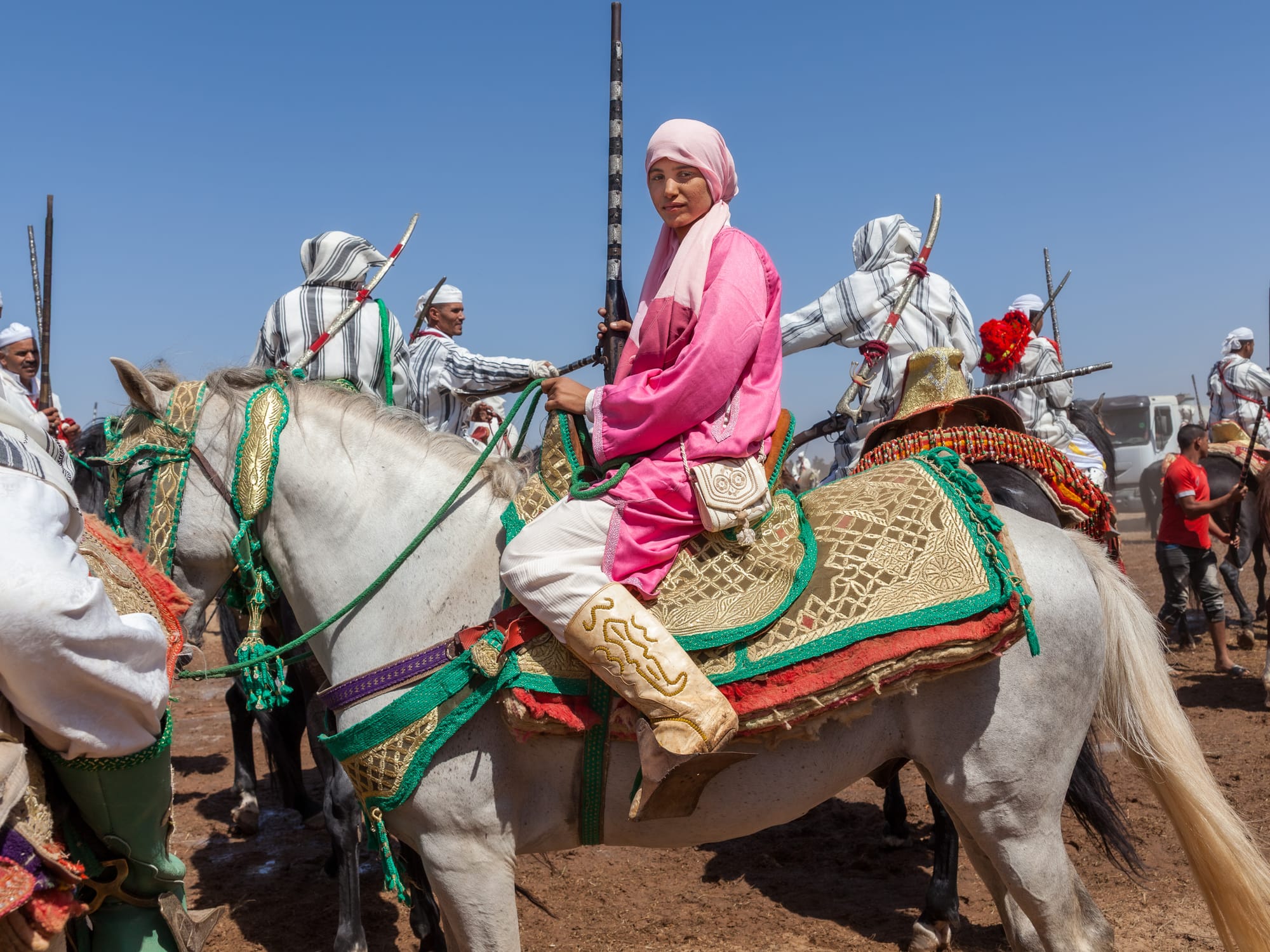
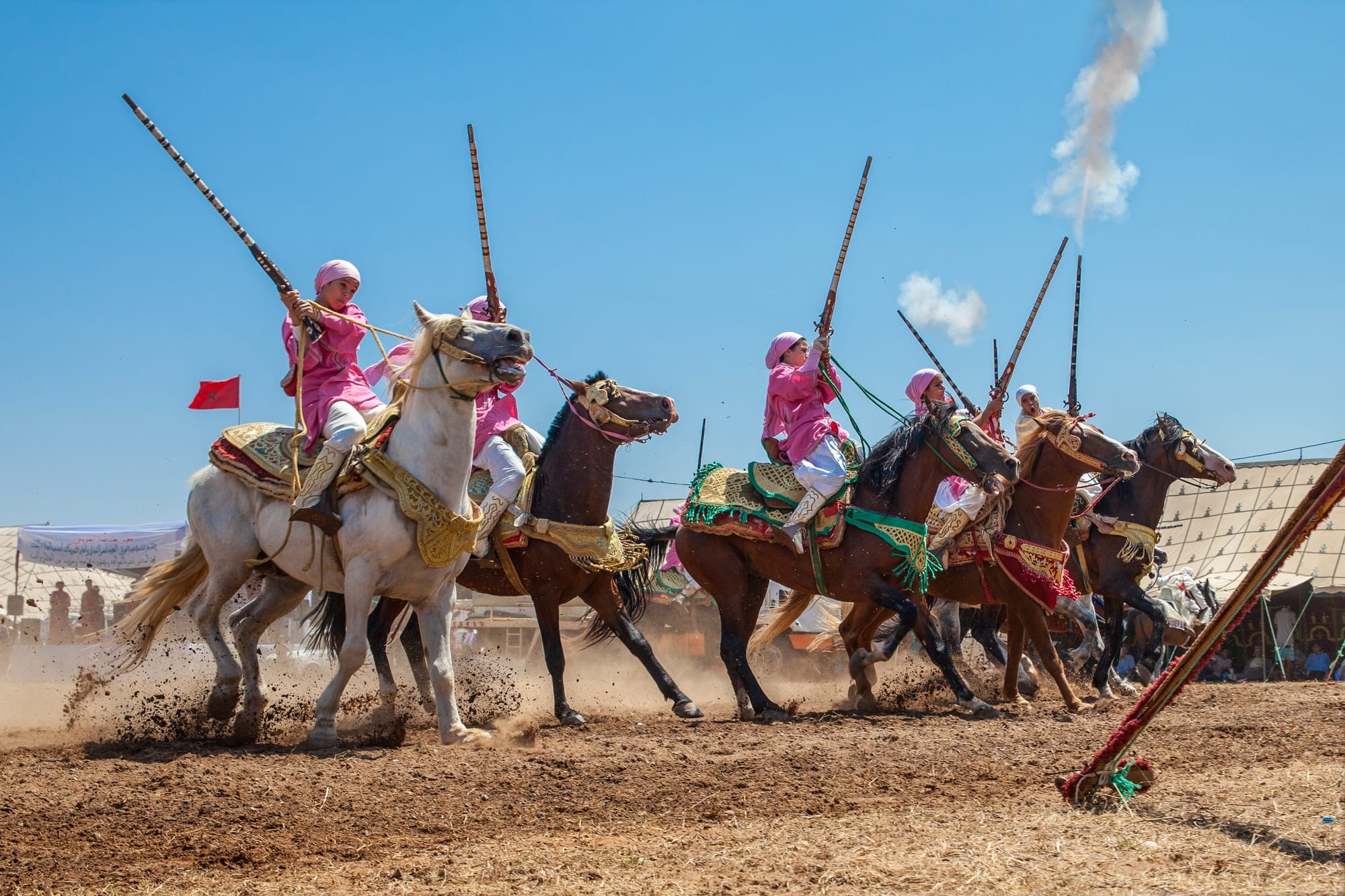
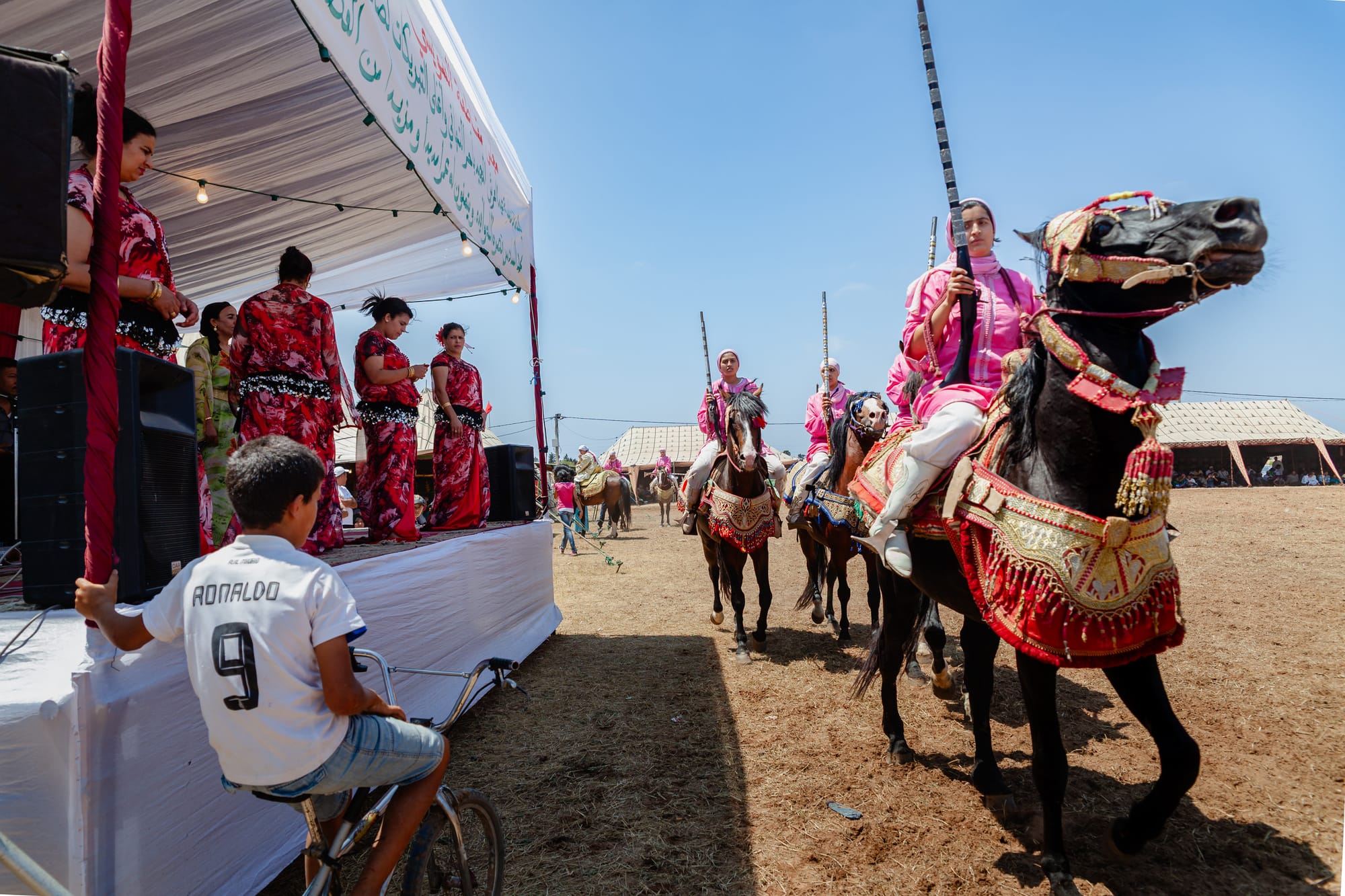
I began photographing the horsewomen of the Farisat Al Hawzia troupe more than ten years ago. They practise Tbourida, a Moroccan equestrian tradition long reserved for men, whose gestures, codes and spaces they have made their own. Tbourida involves a collective charge inspired by historical military parades. The riders advance in a single line, urge their horses into a gallop and must fire their rifles in one simultaneous discharge. Everything depends on mastery of the horse, precision of movement and the cohesion of the group. In a world so strongly associated with masculine representations of power, the presence of women on horseback is more than simply something new: it changes the way this tradition can be seen and passed on.
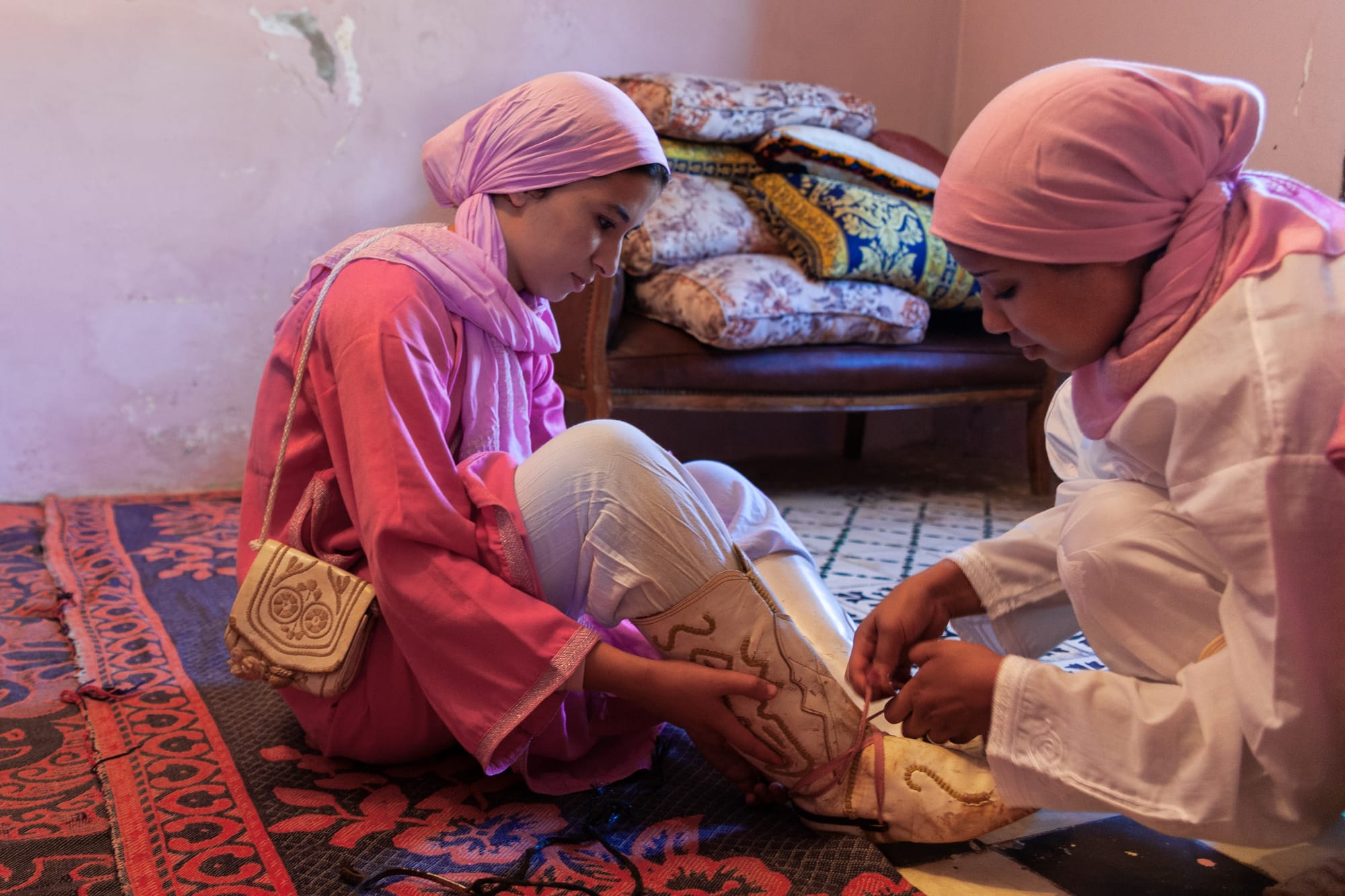
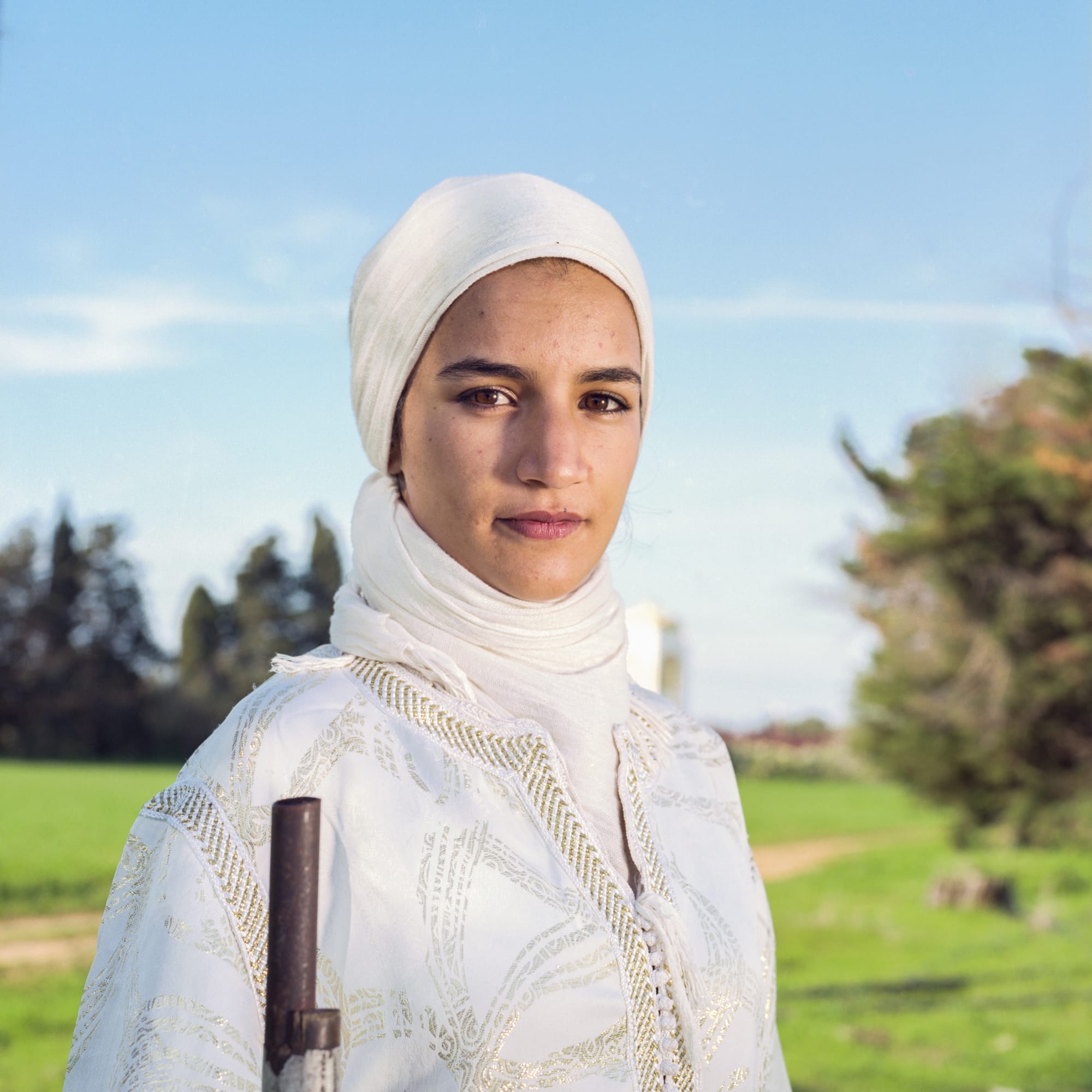
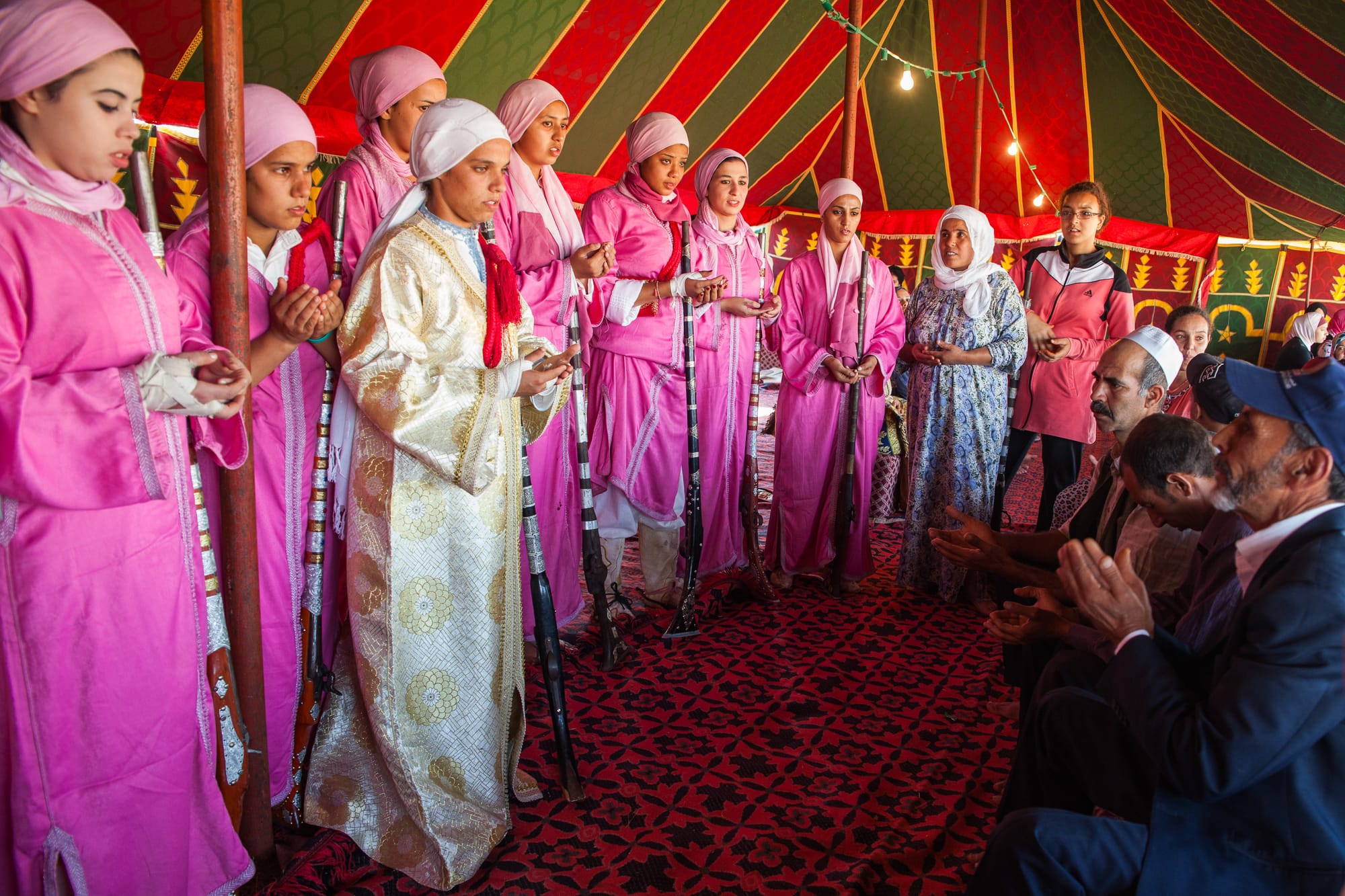
Yet I have never wanted to construct a narrative about women seeking to imitate men or take their place. What interests me is something more subtle: the way they inhabit this practice without ceasing to be themselves. They carry rifles and wear caftans, confront speed and gunfire, yet retain their attention to the elegance of their clothing, their gestures and the bonds that unite them. Their strength does not require them to set aside their femininity. It unfolds alongside it.
The title Tales of Moroccan Amazons evokes the figure of the warrior woman and, more particularly, the memory of Kahina, the Amazigh queen and resistance leader. It does not seek to transform these horsewomen into mythological figures. Rather, it brings their contemporary presence into dialogue with a much older history of women asserting themselves within spaces of power.
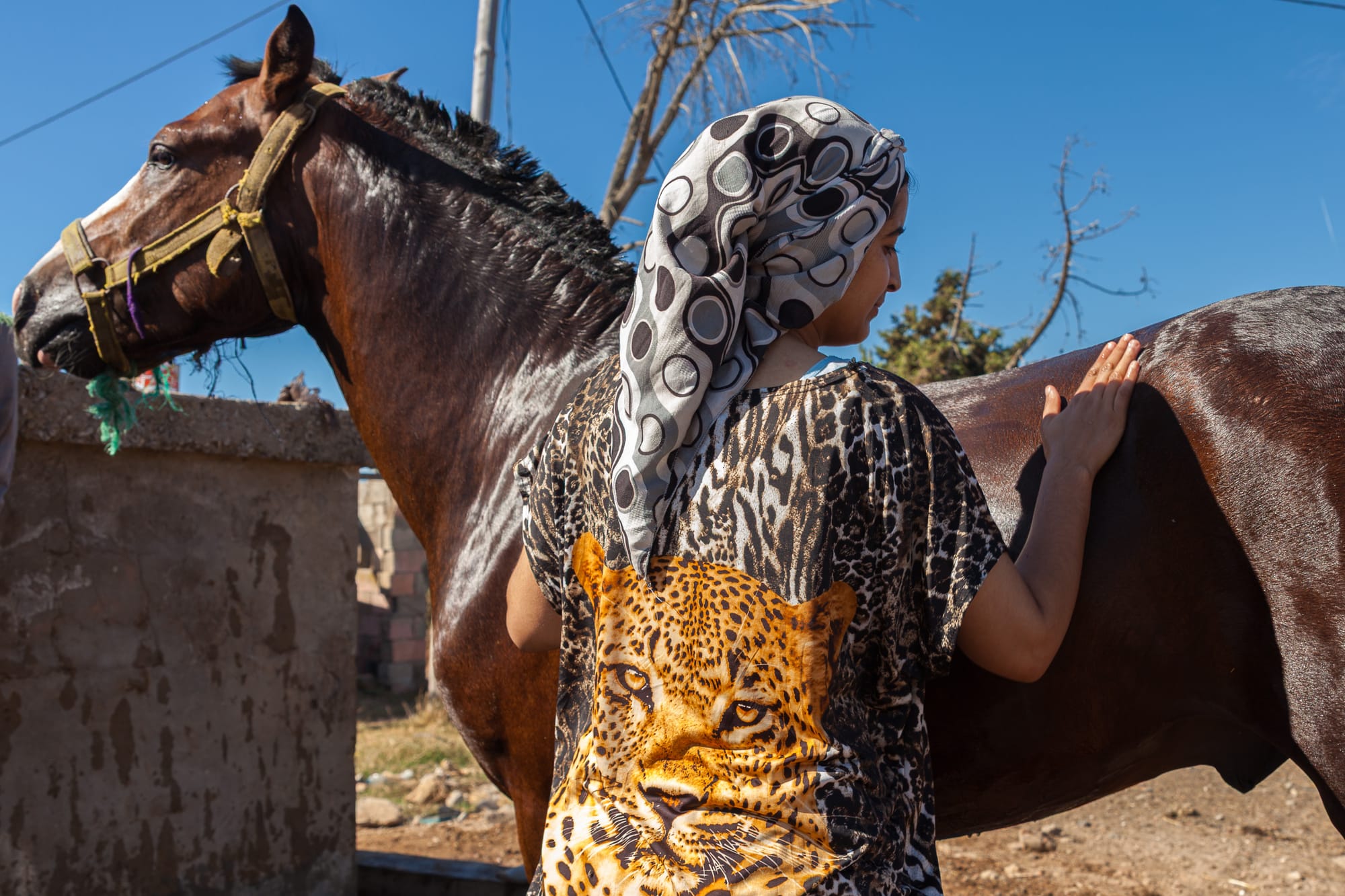
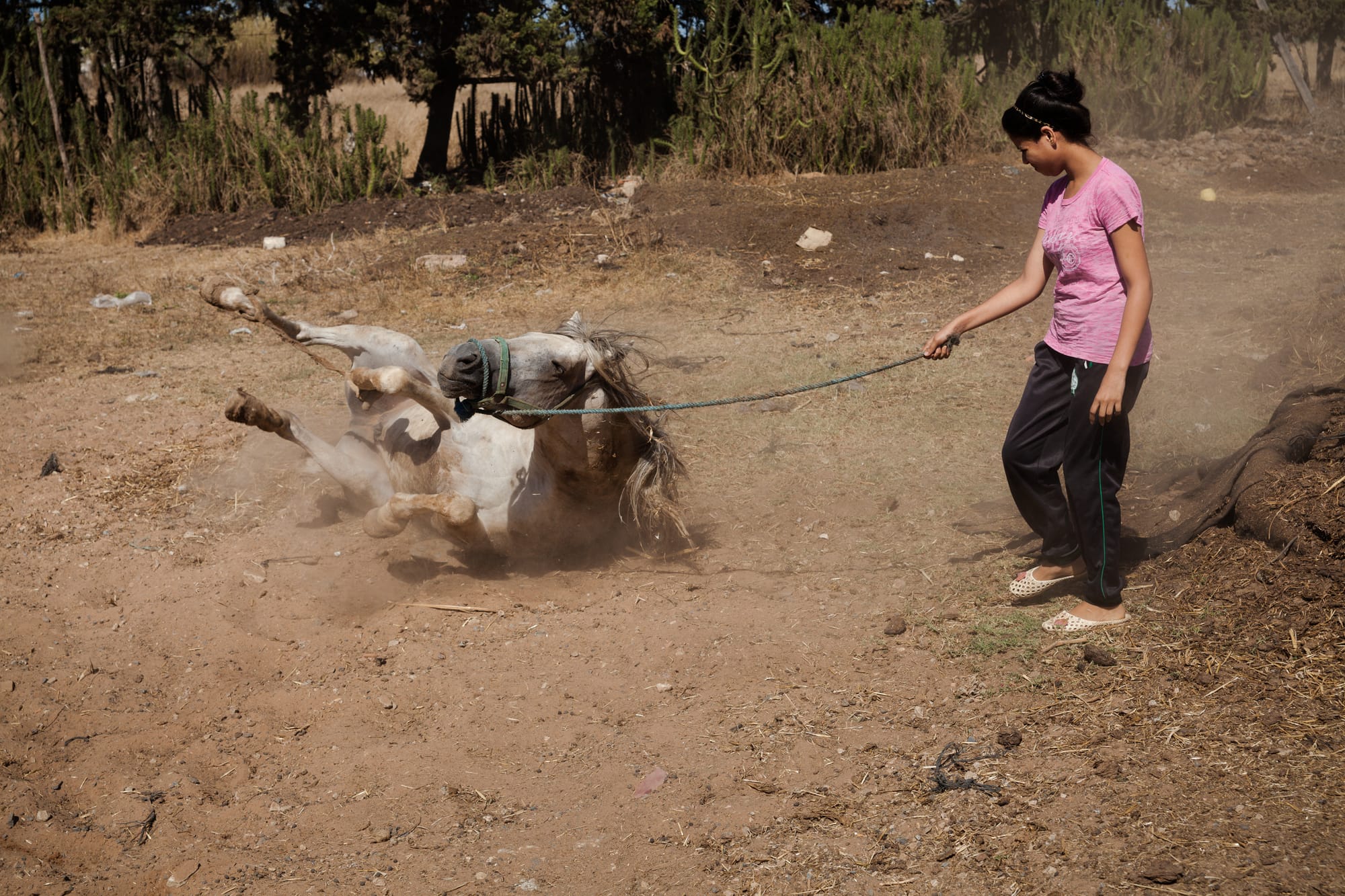
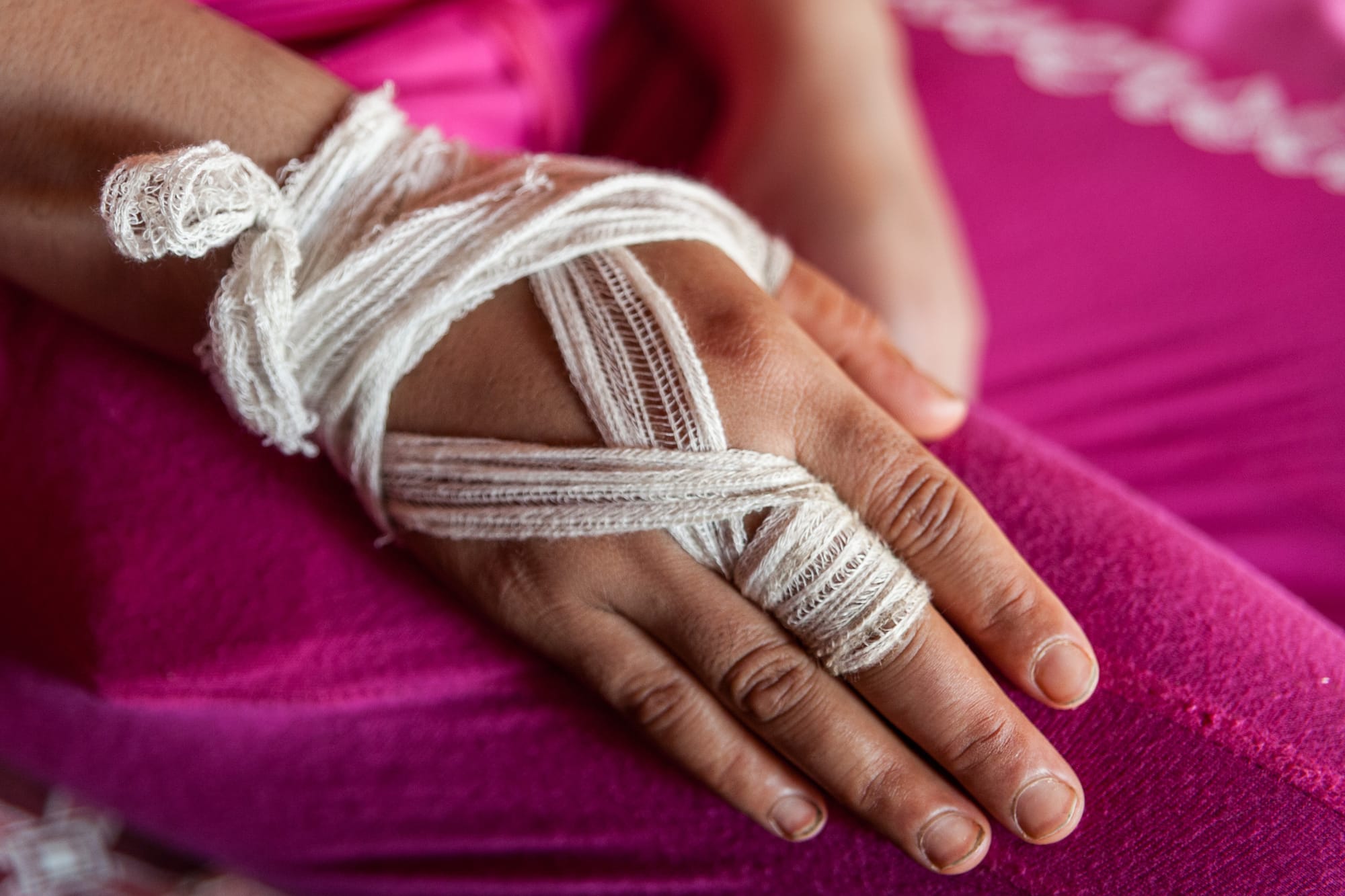
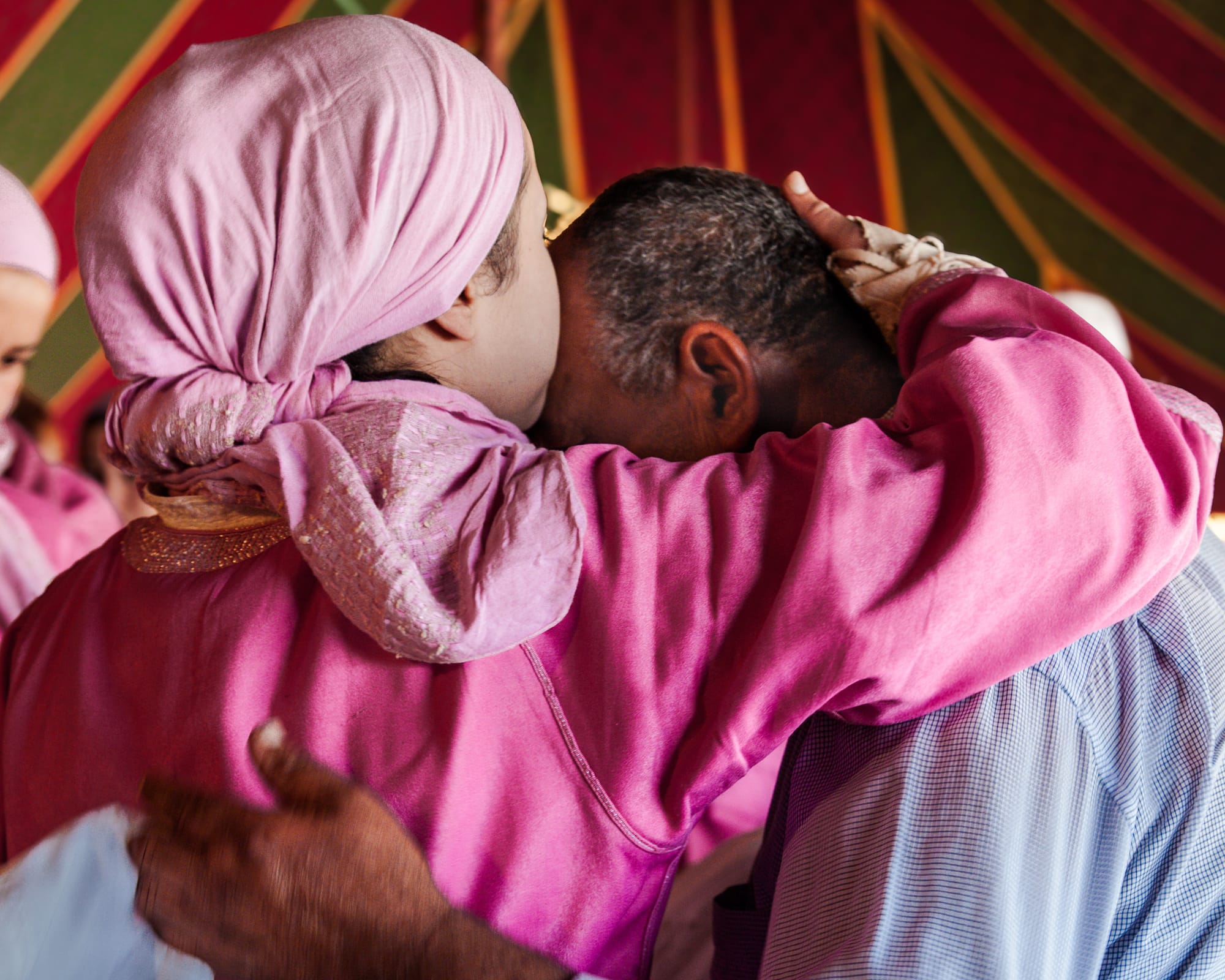
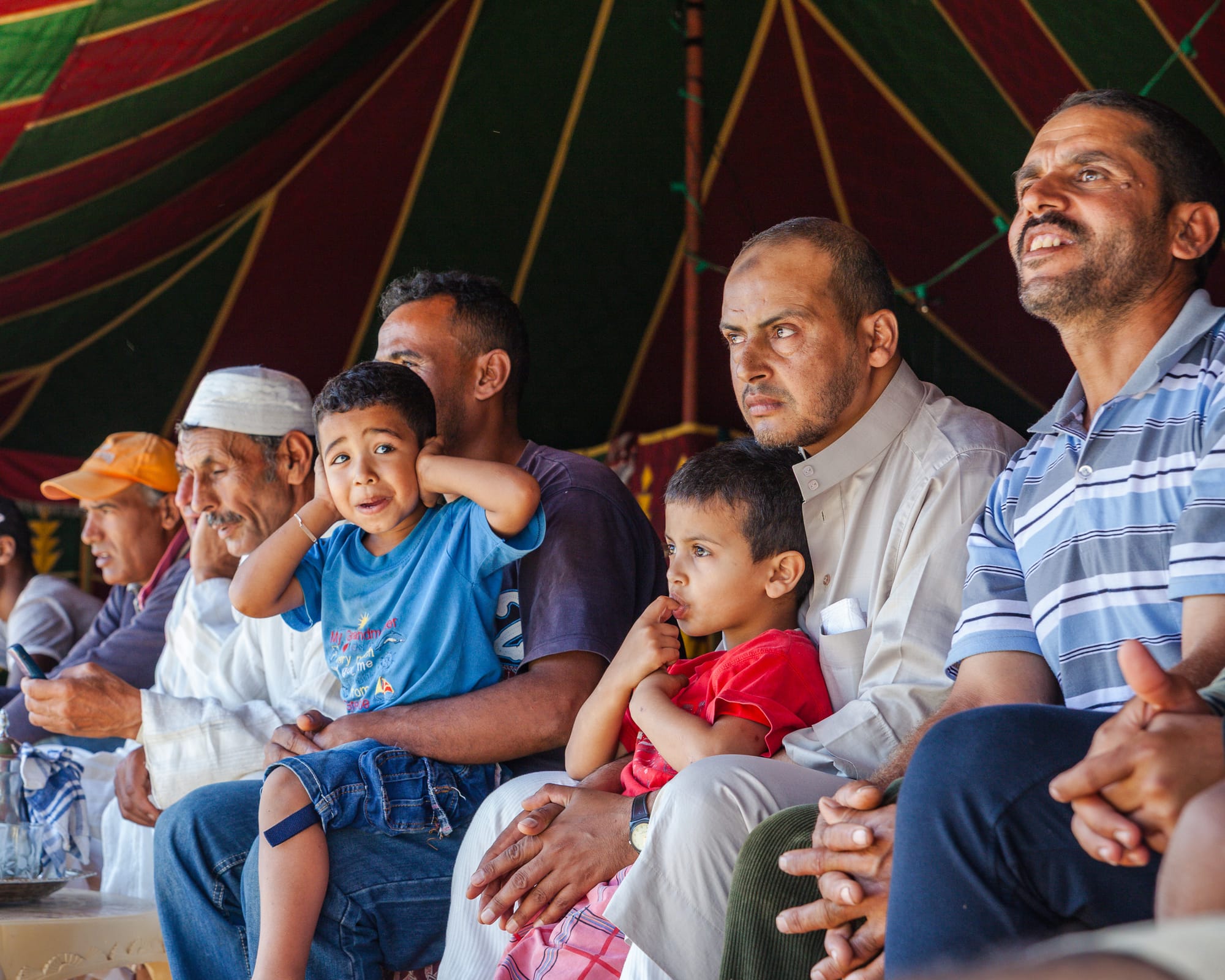
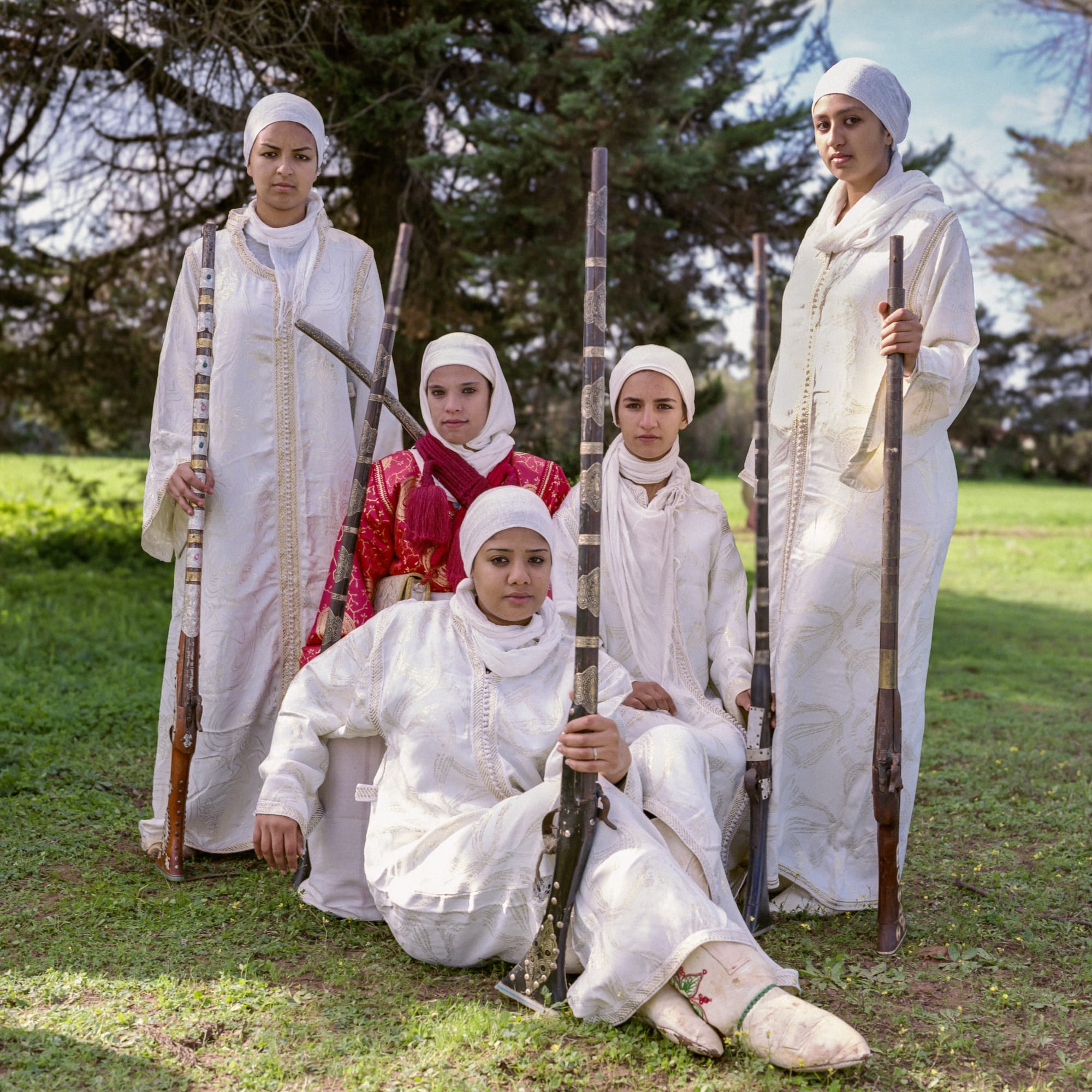
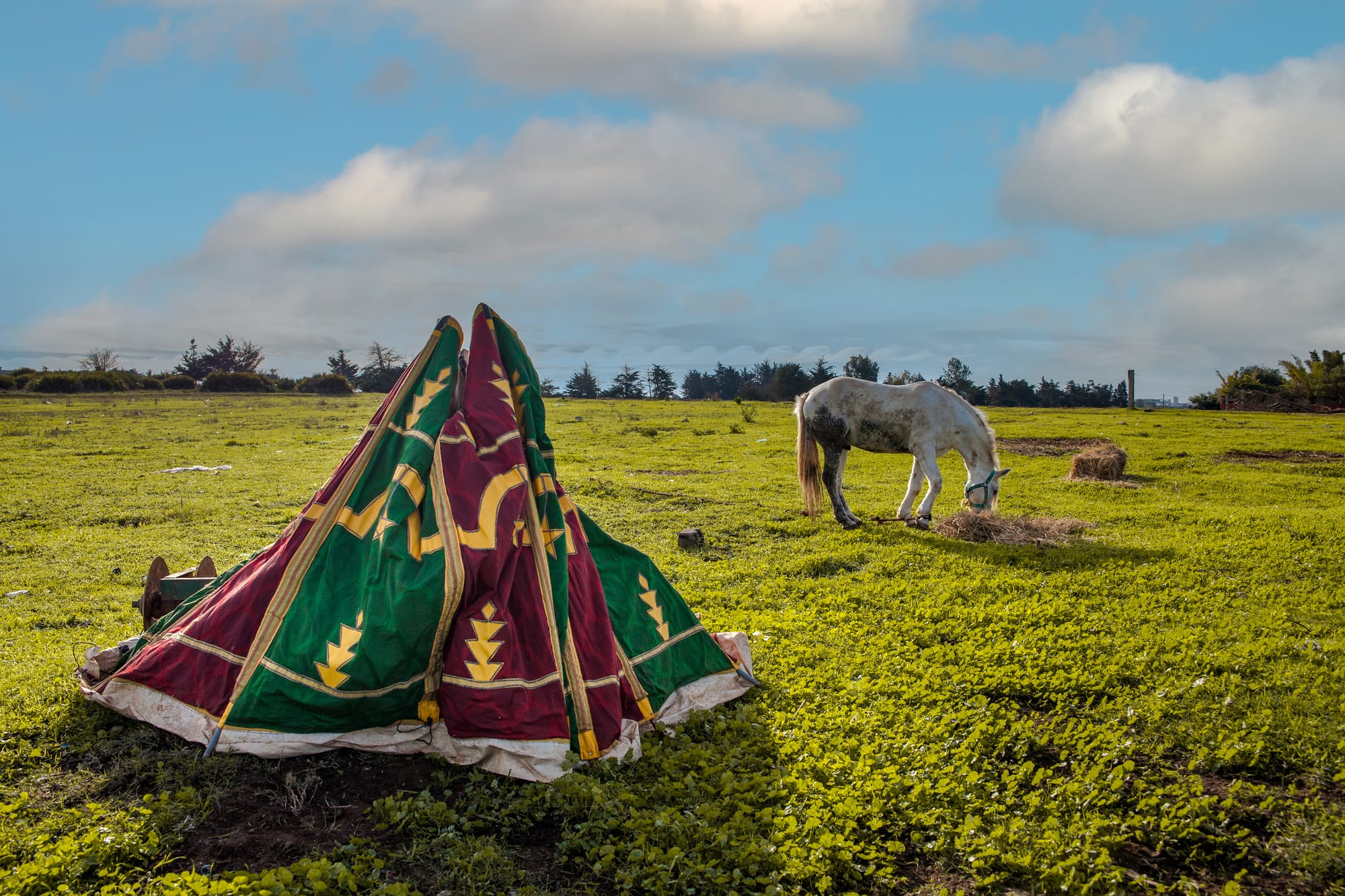
I have built this series around two distinct spaces. The first is that of public spectacle: the arena, the galloping horses, the rifles, the dust, the spectators and the men who still largely surround the world of Tbourida. The second is quieter: a space of waiting and preparation, of clothes being adjusted, of details that become visible when the spectacle comes to a halt. It is in the movement between these two spaces that the project finds its rhythm.
I worked with digital photography to follow the action and the collective life of the troupe. Alongside this, I used a Hasselblad to create more composed, intimate portraits. This slowing down changes the relationship between the photographer and the horsewomen. It momentarily removes them from the noise of the fantasia, allowing them to exist beyond their performance. The series thus alternates between movement and stillness, collective strength and individual presence.
Through this project, I seek not only to make visible women who have long been excluded from this tradition. I want to show what their presence now makes possible. By taking their place within Tbourida, these horsewomen do more than preserve a heritage: they open it towards the future.
They remind us that Moroccan women are not on the margins of their history, but among those who continue to write it.
Tales of Moroccan Amazons has won the Prix Découverte Fondation Yzza Slaoui at the Rencontres de la Photographie de Marrakech 2026.
Author's biography
Zara Samiry is a Moroccan photographer and author working between France and Morocco. She graduated from the École supérieure d’art et de design d’Orléans and holds a degree in Modern Literature from the Sorbonne.
Her practice combines documentary photography, portraiture, and autobiographical storytelling to explore questions of identity, gender, memory, and cultural transmission, with a particular focus on underrepresented narratives.
Her projects have received support from the Magnum Foundation, the Prince Claus Fund, the Arab Fund for Arts and Culture, and World Press Photo. Her work has been exhibited at the International Center of Photography in New York, Photoquai, LagosPhoto, Photo Kathmandu, and the Dubai Photo Exhibition. In 2025, she was nominated for the Leica Oskar Barnack Award.